Building a digital product ecosystem from a single YouTube channel.

Seeing the Opportunity
In 2019, I noticed something surprisingly simple. Thousands of worship tutorials already existed on YouTube. Reliable piano backing tracks didn’t.
Worship leaders needed beautiful arrangements they could immediately sing with. The demand already existed. The product didn’t. So I built it.
+86k
YouTube Subscribers
+25mil
Video Views
1,700+
Community Members

Validating the Idea
The first goal wasn’t revenue. It was validation. Was this actually useful? The answer became obvious. * 86.5K YouTube subscribers * 25M+ video views * customers across multiple countries * churches using the tracks every week People genuinely needed the product.
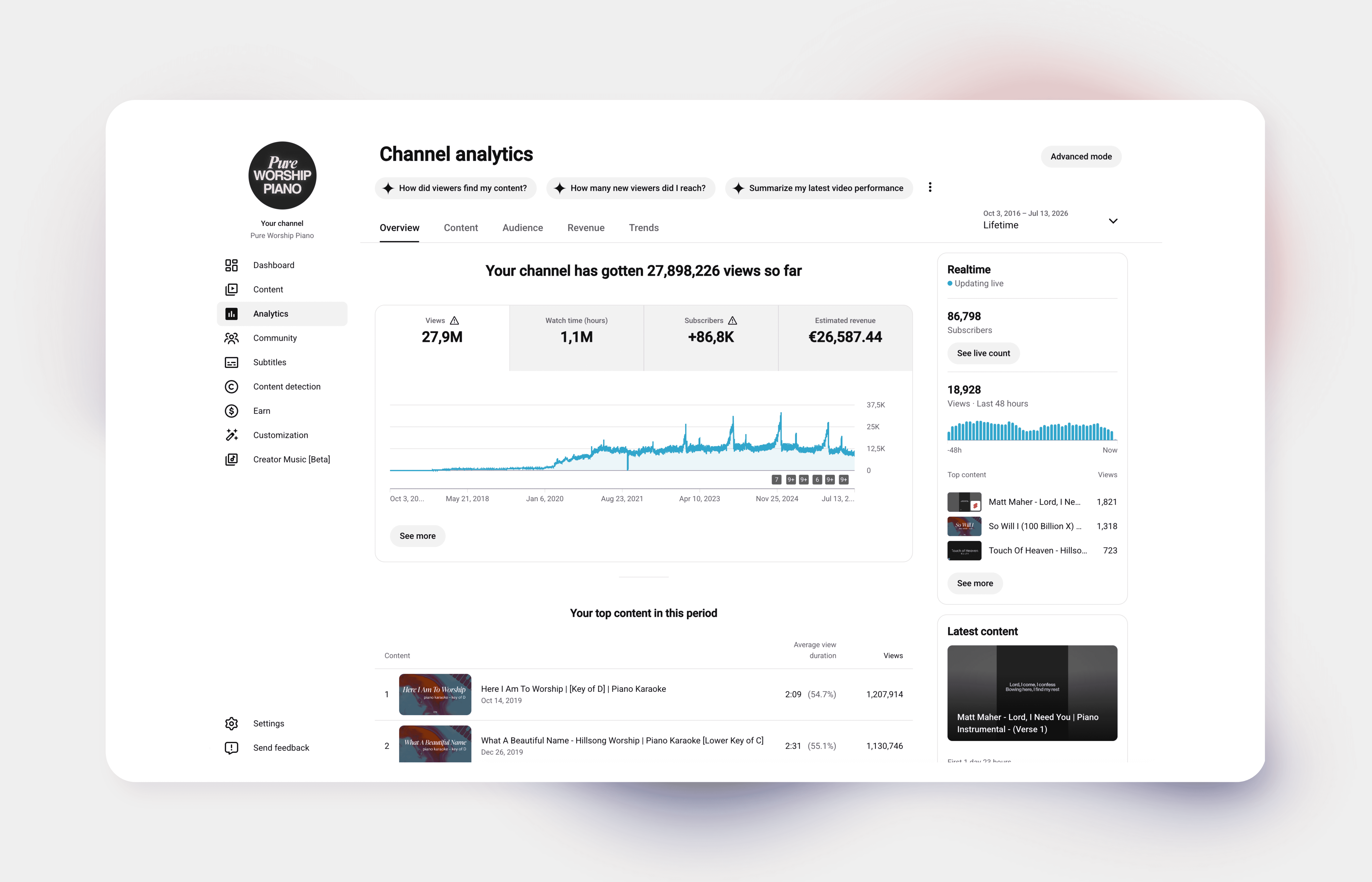
Pure Worship Piano's real YouTube Studio analytics
From Audience to Business
Once the audience existed, a new question appeared. How do you build a sustainable business without hurting the experience that made people subscribe in the first place?
The first answer was Patreon.

A sustainable creator flywheel
Memberships allowed churches and worship leaders to download full tracks while funding future production. It worked. Over time the community grew to more than 1,700 members.

Before-and-after flow diagram comparing old and new paths
More importantly, it validated something even bigger. People weren’t only consuming the content. They were willing to pay for convenience.
The Biggest Product Lesson
I assumed putting full-length videos behind a membership paywall would increase revenue. It did. But it also reduced growth. Views slowed. Watch time dropped.
The data confirmed what I had already suspected. The paywall wasn’t improving the business. So I removed it. That decision changed how I think about products. Optimize the system, not a single metric.

Comparing the impact of moving full-length videos behind a membership paywall
One question changed everything.
“How can every viewer receive more value?” Free videos became full-length again. YouTube became the discovery engine.
Building the Store
As the catalog expanded, the platform became the bottleneck. Patreon solved memberships. It wasn’t built for commerce. Customers expected: • one-time purchases • bundles • promotions • faster checkout Instead of replacing Patreon, I separated memberships from commerce. Fourthwall became the storefront. Patreon remained the membership layer. The buying experience became much simpler.

A storefront designed for instant digital purchases
Building the Ecosystem
Every design decision had a purpose. The name Pure Worship Piano communicates exactly what people receive. No clever wording. No unnecessary branding. Just clarity.
The visual identity follows the same philosophy.
Whether someone discovers a YouTube video, visits the store, downloads a product, or joins the membership, it should all feel like the same brand.
The goal wasn’t artistic expression. It was recognition.

The visual system — palette, typography, and consistent thumbnails
Reflection
Looking back, I don’t see Pure Worship Piano as a YouTube channel anymore. I now see it as a product ecosystem. Every decision — from content strategy and pricing to branding, commerce, and customer experience — has been an opportunity to understand how digital products grow.
It has taught me how to identify problems, validate ideas, build systems, and continually improve products based on real user behavior.